The bet
The original job was narrow. A major manufacturer that wasn't a supplier on the platform had public product data, and many of our buyers already held quotes from them. If buyers could enter their quote and we filled in the rest from that public data, they could evaluate the manufacturer's systems on Anza without the manufacturer signing on.
The use case itself was real. Buyers did hold those quotes, and they did want to compare them against what else was available. What we never tested was the size of it: whether enough buyers held them, and wanted to run them through Anza, to justify what the build would cost. Whether a need exists and whether it's worth building for are two different questions, and we only had an answer to the first one.
Building it
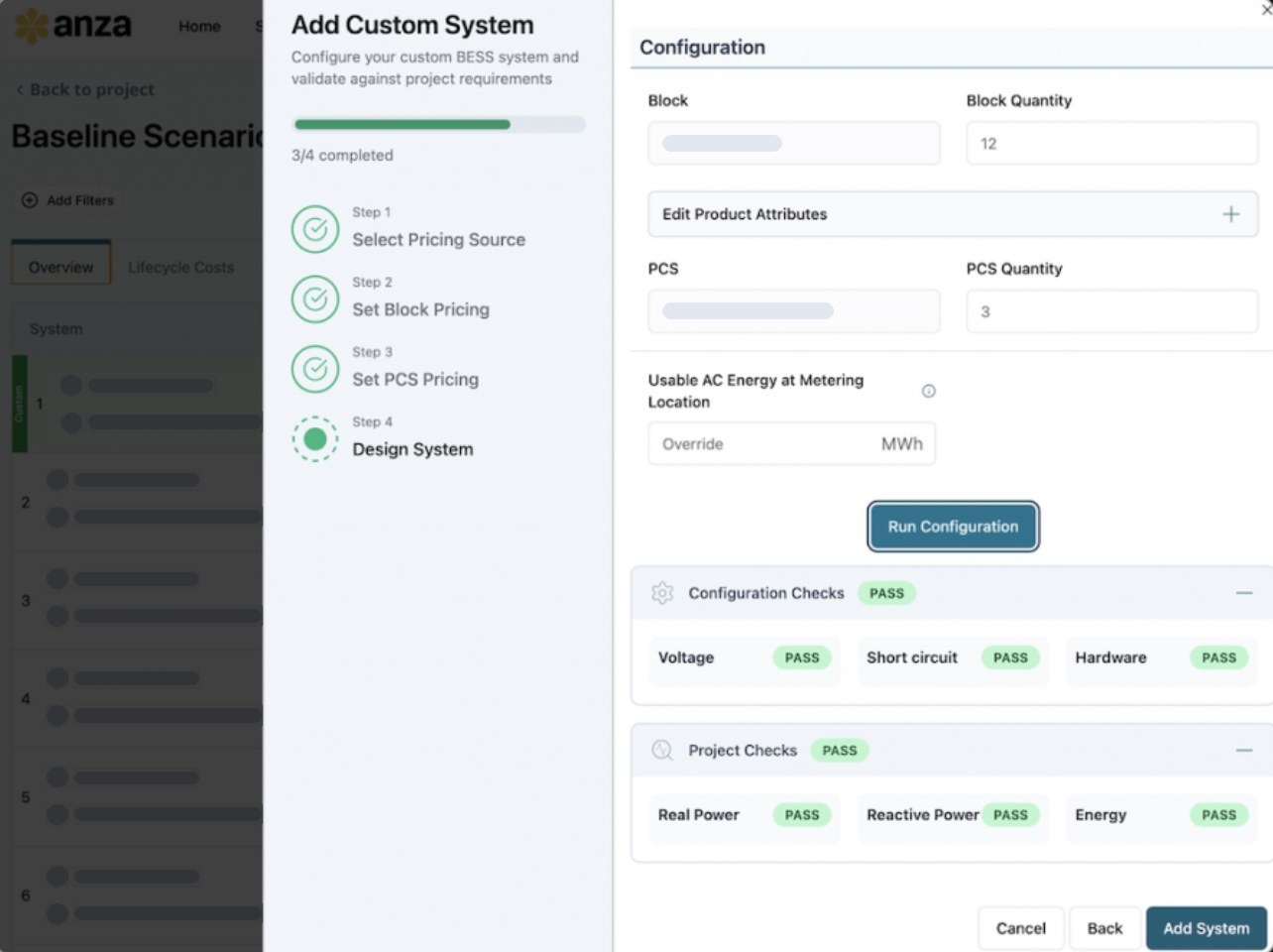
Design ran from the end of Q3 to mid-December 2025, longer than planned. Scope kept growing. A tool for one manufacturer's quotes became a general builder: buyers could enter any custom quote, with any block and PCS details, and check whether the resulting system was compatible with their project parameters. Each addition needed long discussions about pricing sources, block and PCS pricing, and the checks a system had to pass.
What happened
Custom Systems launched in February 2026. By October, only 13% of active storage users had used it, and the accounts touching it never compounded. The instrumentation showed where it broke: most people who abandoned the add flow left at the first step, Select Pricing Source.
Two things stood out. Adoption stayed flat while the broader storage product kept growing, so this wasn't a slow start that would compound later. It was a ceiling. And the drop-off clustered at one step rather than spreading across the flow, which points at a specific barrier rather than general disinterest.
What the analytics couldn't tell us was why people stopped at that step, or whether the audience was simply smaller than we had assumed. Those are different problems with different fixes, and funnel data on its own can't separate them.
Custom Systems never compounded
Monthly active accounts on storage vs. accounts touching Custom Systems (2026).
What I took from it
The flow asked buyers for data the library existed to spare them. The buyers who truly needed custom systems were the few who already had that data, so demand was narrower than the bet assumed. Most of what follows is clearer to me now than it was while we were building.
- Validate demand with a cheaper probe first. A lightweight prototype or request form would have shown how many buyers wanted this before we built the full flow.
- Instrument the funnel from day one. The drop-off step was visible in the data, and seeing it sooner would have saved months, though it would still only have told us where people left, not why. That part needs talking to them.
- Design data entry around what users have. The system needed a pricing source; the buyer often didn't have one to hand. Building the first step around what the model required rather than what the customer actually held is precisely where the flow lost people.
- Treat growing scope as a signal. When every discussion added complexity, that was a sign to go back and narrow the problem. Widening the feature was standing in for validating the original need, not doing it.
What I'd push next. Rather than reworking the flow, I'd go back to the small group who do use Custom Systems and learn what they have in common. If they share a real workflow, there's a case for narrowing the feature around that audience instead of serving everyone badly. If the evidence doesn't support continued investment, the honest answer is to simplify it or retire it rather than keep expanding it. I'd want that answer before anyone spends another cycle on it.
The most expensive part of this feature was the question we didn't ask before building it.